The best surgeon is both a wimp and brave at the same time.
A “wimp” because fear creates caution. Fear makes you double-check anatomy before cutting. Fear forces humility. Fear reminds you that every human body can punish arrogance in seconds. Fear prevents recklessness.
And brave because despite that fear, the incision still has to be made.
A surgeon who feels nothing becomes careless.
A surgeon who feels too much becomes paralyzed.
So surgical training quietly teaches a strange balance:
To remain calm while fully understanding disaster.
Perhaps that is real ataraxia — not the absence of fear, but the ability to function gracefully beside it.
Like the protagonist in Lucky Number Slevin, surgeons eventually learn to stand before danger without visible panic. But unlike cinema, it is not because they are fearless heroes.
It is because medicine slowly trains human beings to carry terror silently.
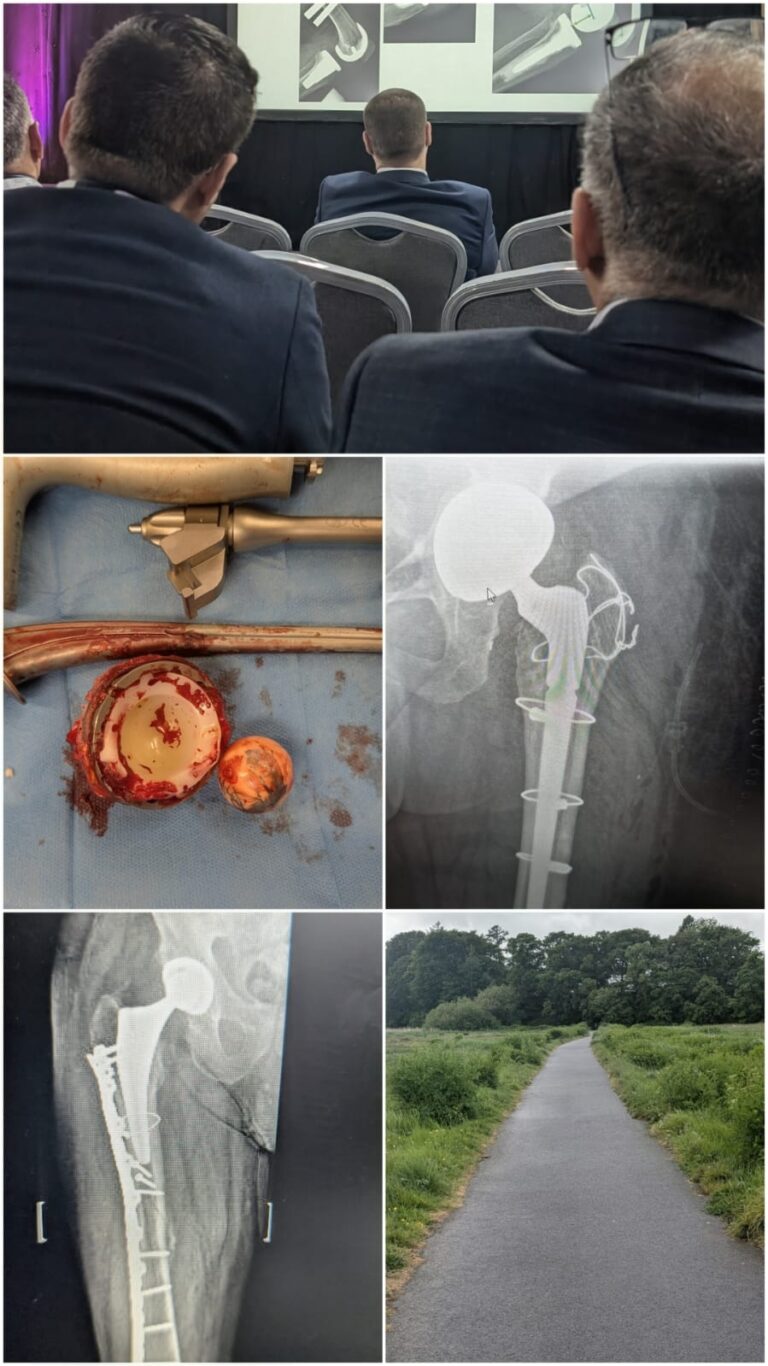
10.The Broken Leg That Made Me an Orthopaedic Surgeon
I was five years old when I fractured both bones of my right leg.
At that time, I was staying with my grandparents in our village. It was the early 1980s — an era when villages still moved at the speed of bicycles, dusty roads, and word of mouth.
That afternoon, I had gone to buy candy.
I still remember running back home, holding it proudly in my hand, when suddenly a biker came speeding down the road and ran over me.
What I remember next has never really left me.
I looked down and saw my leg twisted unnaturally, with the broken bone protruding through the skin. An open fracture. Even at five years old, I understood something terrible had happened.
Strangely, I do not remember screaming.
Nobody at home even knew what had happened until some family friends who witnessed the accident rushed to inform my grandparents. My grandfather came running out of the house, picked me up, and drove me to the hospital.
For years afterward, he proudly told people the same story:
“The boy never cried. He only told me, ‘Hold my leg still.’”
The hospital doctors advised surgery — most probably an external fixator, though I only understood that much later in life.
But my grandfather belonged to a different generation.
Instead of surgery, he took me to a traditional bone setter living in a distant desert village. The man was famous locally for treating fractures using oil extracted from special desert ants. To modern ears it sounds almost mythical, somewhere between medicine and folklore.
Yet in those days, such healers were trusted deeply.
I still remember the long journey, the smell of oils and herbs, the rough hands examining my swollen leg, and the strange confidence with which the bone setter worked.
Then something remarkable happened.
Within three weeks, he had me bearing weight on the injured leg. The wound healed beautifully. Over time the fracture remodeled so perfectly that after a year nobody could even tell the leg had once been shattered.
Looking back now as an orthopaedic surgeon, I understand many things differently. I understand the extraordinary healing potential of children’s bones. I understand remodeling, biology, immobilization, and luck. I also understand that not every story ends so fortunately.
But somewhere inside that frightened five-year-old child staring at his own exposed bone, a seed had already been planted.
Perhaps that is where my journey into orthopaedics truly began.
Not in medical school.
Not in residency.
Not in an operating room.
But on a dusty village road, holding a piece of candy in one hand and a broken childhood in the other.
“Out of suffering have emerged the strongest souls; the most massive characters are seared with scars.”
— Khalil Gibran