Powerlessness
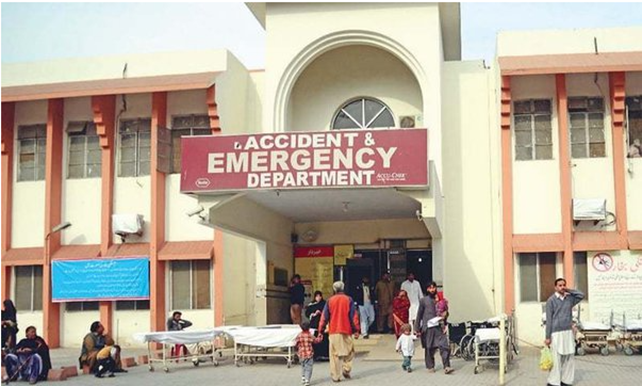
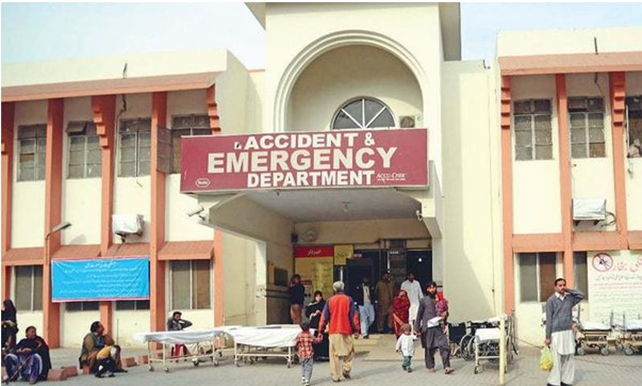
On December 27, 2007, I was on call as a resident at Rawalpindi General Hospital — now known as Benazir Bhutto Hospital.
That evening, the Casualty Medical Officer urgently called me to attend a case of firearm injury in the Emergency Room.
I went with my senior resident.
When we entered the E.R., there was only one patient lying alone on a stretcher.
It was Benazir Bhutto.
What shocked us first was that we failed to recognize her immediately. The woman whose face dominated television screens, political rallies, newspapers, and the imagination of millions looked, in that moment, nothing like power. There were no crowds around her. No speeches. No slogans. No authority.
Only a wounded human being struggling between life and death.
She was gasping her last breaths.
In that room, all the symbols of power had disappeared. Dynasty, politics, influence, security, wealth — everything had been stripped away by a few seconds of violence. What remained was the unbearable fragility of human life.
My senior resident immediately tried to move her to the Operating Room. The elevator was not functioning. I still remember the surreal sight of him lifting her in his arms and carrying her upstairs himself — one exhausted doctor carrying one of the most powerful women in Pakistan through silent hospital corridors.
It felt less like history and more like helplessness.
For nearly thirty minutes inside the O.R., nobody was allowed to touch her until Dr. Musaddaq Khan, Principal of Rawalpindi Medical College and Head of Surgery, arrived personally. After his arrival, an open cardiac massage was performed in an attempt to save her life.
But she could not survive.
What disturbed me even more was something Dr. Musaddaq later mentioned — that even in those final moments, while doctors were fighting to save her life, voices around us were allegedly shouting about missing rings and diamond glasses belonging to Mohtarma.
That memory has never left me.
I do not write this as a political statement. In truth, I have always hated the ugliness of Pakistani politics. But witnessing this moment firsthand became an admonition I carry to this day.
Power is an illusion.
At the end of life, every title collapses. Every convoy disappears. Every guard, every privilege, every throne loses meaning. Whether ruler or commoner, we all arrive at the same final moment — alone, helpless, and powerless before death.
That night, on a hospital stretcher in Rawalpindi, I did not see a Prime Minister.
I saw the mortality of every human being.